AEM Templates: Editable vs Static, and How to Create an Editable Template
AEM templates explained: editable vs static templates, template types, structure, initial content, layout and policies, where they live in /conf, and step-by-step creation.
Rewritten in October 2026 for AEM as a Cloud Service and AEM 6.5, checked against Adobe's documentation on editable templates.
On this page
Every AEM page is created from a template. The template decides which components a new page starts with, which components authors may add, and which design rules apply. AEM has two kinds of page templates, static and editable. On current projects you will work with editable templates almost exclusively. This tutorial explains both, then walks through creating an editable template.
Static vs editable templates
| Static template | Editable template | |
|---|---|---|
| Who builds it | Developers only | Template authors, in the Template Editor, on top of components and template types prepared by developers |
| Where it lives | /apps/<site>/templates/<name> | /conf/<folder>/settings/wcm/templates/<name> |
| Link to pages | The page is a copy. Later changes to the template do not reach it. | Pages stay linked. Changes to structure and policies reach existing pages. |
| Design settings | Design mode | Content policies, edited in the Template Editor |
Page authors see no difference: they pick a template in the Create Page wizard either way. The difference is in maintenance. Changing a static template means a code deployment, and existing pages keep the old version.
Static templates on AEM as a Cloud Service
Adobe has not removed static templates from AEM as a Cloud Service, but it discourages them. /apps is immutable at runtime, so the design settings of a static template cannot be edited in the UI; they have to come from Git through the Cloud Manager pipeline. Cloud Manager's code quality checks also include a rule, StaticTemplateUsage, that flags static templates. On AEM 6.5 Adobe likewise calls static templates "not considered a best practice".
To convert old static templates, Adobe points to the AEM Modernization Tools, a community project that also converts designs into policies and Foundation components into Core Components. Since release 2026.9.0 of AEM as a Cloud Service, Adobe's Cloud Migration skill for AI coding tools can also convert static templates into editable ones.
How an editable template is built
An editable template has a few layers, and knowing which layer a change goes into explains how a template behaves.
Template types
A template is created from a template type, which works as a template for templates. The type sets the page component, the components allowed in the Template Editor, and usually the responsive breakpoints. AEM ships types such as HTML5 Page; project-specific types live in /conf/<folder>/settings/wcm/template-types. When a template is created, the type's structure and initial content are copied into it, and from then on the template is independent of its type.
The four parts you edit
- Structure. Components that appear on every page and that page authors cannot move or delete, such as a header and a footer. A structure change reaches existing pages. Components here are locked by default. Unlock one to let authors edit its content on the page, and unlock a layout container to let them add components inside it.
- Initial content. Content copied into each new page, which authors can then change or delete. Changes to initial content only affect pages created afterwards.
- Layout. The responsive layout for each breakpoint, set the same way as in page authoring.
- Policies. A content policy holds the design settings of a component: which components a layout container allows, default components for dropped assets, image sizes, the styles offered by the Style System. One policy can be shared by several templates. The page policy also names the client libraries the page loads.
Behind the scenes, a template node has structure, initial and policies children, plus a status of draft, enabled or disabled. A page created from it records the template in cq:template. At render time AEM merges the template's structure with the page's own content, which is why structure changes show up on existing pages.
Where templates live, and who may edit them
- Templates go in a configuration folder:
/conf/<folder>/settings/wcm/templates, with policies in/conf/<folder>/settings/wcm/policies./conf/globalexists by default and acts as a fallback, but Adobe recommends a folder per site. - Template authors belong to the
template-authorsgroup, which ships empty. Adobe warns that the role is powerful, so add only the people who really build templates. - Anonymous users need read access to templates and policies, since the publish service renders pages through them. Content authors need replicate rights, because publishing a page also publishes its template and policies.
- Keep the number of templates low. Adobe's rule of thumb is under 100, and it does not recommend more than 1,000.
Create an editable template, step by step
The screenshots below are from AEM 6.4. The consoles and dialogs are in the same places in AEM 6.5 and in AEM as a Cloud Service.
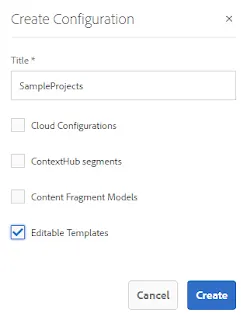
1. Create a configuration folder
- Go to Tools > General > Configuration Browser and click Create.
- Enter a title for the folder, for example SampleFolder, and tick Editable Templates.
- Click Create.
2. Create the template
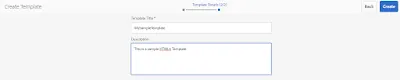
- Go to Tools > General > Templates and open the folder you created.
- Click Create, select a template type such as HTML5 Page, and click Next.
- Enter a title and description and click Create, then Open to edit the template.
3. Author the structure and unlock the layout container
In Structure mode, add the components every page should have. Then unlock the main layout container, so that pages built from the template get a "Drag components here" area. Use the policy icon next to the lock to choose which components authors may add there.

4. Enable and publish the template
A new template starts as a draft. In the Templates console, select it and click Enable. Only enabled templates appear in the Create Page wizard. Then publish the template: the publish service needs it to render the pages.
5. Allow the template on the site
Open the page properties of the site's root page, go to Advanced > Template Settings and add the folder's template path to Allowed Templates:
/conf/<your-folder>/settings/wcm/templates/.*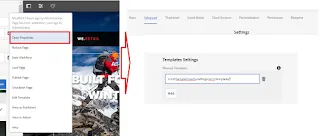
This sets cq:allowedTemplates on the page, and pages below it inherit the setting. Start with only this property, and only on the site root: that's Adobe's advice, because the other availability rules (allowedPaths, allowedParents, allowedChildren) need a developer and a deployment for every change.
Templates with the Universal Editor
Sites edited with the Universal Editor, including those delivered through Edge Delivery Services, use templates differently: any page can become one, through Use Page as Template in its page properties. Pages made from it are independent copies. Later changes to the template never reach them. These templates are enabled when created and do not need to be published. The Style System does not apply to them: their styling lives in the project's code.
Page templates and site templates
A site template is something else. It packages a whole starter site, with base content, page templates and a theme, and it is used through Sites > Create > Site from template. Adobe ships site templates for a standard AEM site and for Edge Delivery Services projects. A page template, the subject of this tutorial, defines one kind of page within a site.
Common questions
Why can't authors see my template in the Create Page wizard?
Check three things: the template is enabled, its path is in Allowed Templates on the branch (or an ancestor page), and it is published if the problem is on the publish service.
Do template changes update existing pages?
Changes to structure and policies do, once the template is republished. Changes to initial content only affect new pages. Universal Editor templates never update existing pages.
Where does the AEM Project Archetype put templates?
Under /conf/<appId>/settings/wcm/ in the ui.content module. A new project gets a "Content Page" template and an Experience Fragment "Web Variation" template, both based on template types the archetype generates.
Next: put components into your template. See AEM Core Components, modern component implementation patterns, and HTL for writing your own.
More in Components and templates
- AEM Core Components: The Full List and How to Use Them
All 31 Core Components in release 2.33.0, versions and proxy components, how they ship on AEM as a Cloud Service and 6.5, and how to customize them.
- Modern AEM Component Implementation Patterns
The component patterns behind AEM Core Components: configurable components, separation of concerns, pre-configurable capabilities, proxy components, versioning and model interfaces.
- Sling Models vs WCMUsePojo in AEM
The difference between WCMUsePojo and Sling Models for AEM component logic, what a POJO is, and why Adobe recommends Sling Models.